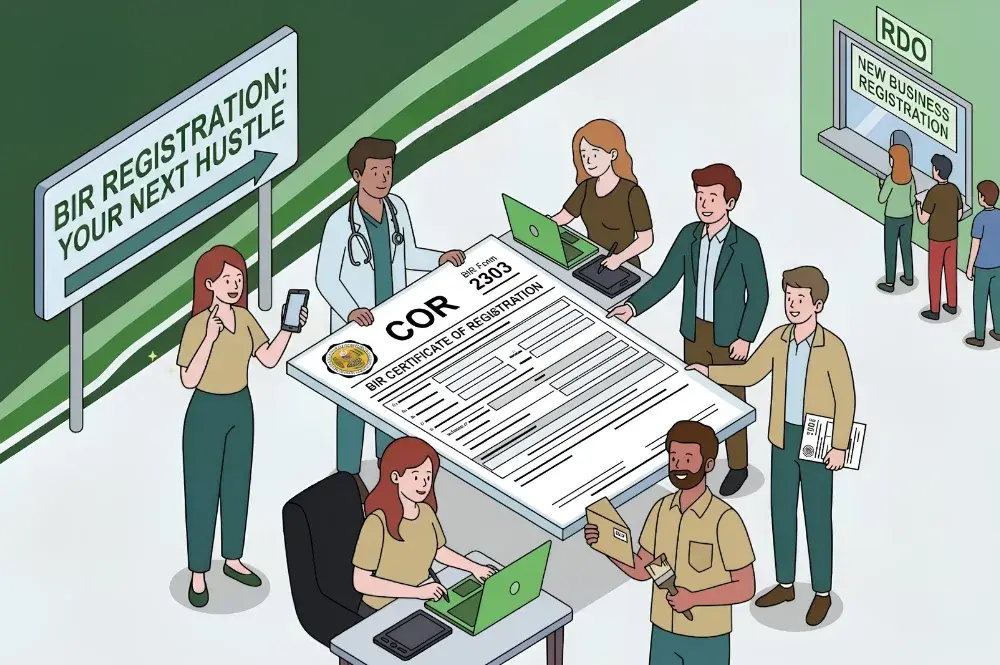
tax
How Self-Employed Individuals Should Register with the BIR
Posted by Mariel Therese Deocampo
onAugust 14, 2026
You’ve taken the leap—whether by opening your own sari-sari store, running a small café, selling online, offering consulting services, or freelancing as a creative professional. Whatever form your hustle takes, if you’re earning on your own and not through an employer, you fall under one important category: self-employed.
And with that comes a legal responsibility: registering with the Bureau of Internal Revenue (BIR).
The law is clear. If you’re self-employed—whether you’re a sole proprietor running a business or a professional/freelancer offering services—you must register with the BIR. The moment your first sale happens, or within 30 calendar days of securing your Mayor’s Permit, Professional Tax Receipt, or your DTI business name certificate- whichever comes first.
If you don’t comply, penalties could follow, and you also miss out on the legitimacy and financial benefits that come with proper registration.
This guide breaks down exactly how registration works for all self-employed individuals in the Philippines—not just freelancers, but also entrepreneurs and small business owners.
Who Counts as “Self-Employed”?

Who Counts as “Self-Employed”? - Illustration showing examples of self-employed individuals in the Philippines, including small business owners, freelancers, professionals, and independent service providers.
According to BIR rules, self-employed individuals include:
Single proprietors / entrepreneurs – Anyone who runs a business under their own name or a registered business name (like a sari-sari store, online shop, food stall, retail store, etc.)
Professionals in private practice – Doctors, lawyers, accountants, engineers, and other licensed practitioners working independently
Freelancers and service providers – Creatives, consultants, IT workers, online freelancers, tutors, coaches, etc.
Mixed-income earners – Those who have both an employer (withhold tax from salary) and a side business or freelance gig
So whether you’re setting up a small retail shop, offering professional services, or running your own gig economy hustle, if you’re earning outside of being employed by a company, you are considered self-employed.
For more details, check the BIR’s official page on Primary Registration
When Should You Register?
The BIR requires that self-employed individuals register:
On or before the commencement of business or practice of profession, OR
Within 30 calendar days from the issuance of:
- Your Mayor’s Permit or Professional Tax Receipt (issued by the LGU), OR
- Your Certificate of Business Name Registration (CBNR) from the DTI
Once you’ve met any of these milestones, you’re expected to register at your RDO (Revenue District Office). After completing the process, you’ll be issued a Certificate of Registration (COR, BIR Form 2303), which is your proof of compliance.
Why the COR Matters for Entrepreneurs and Freelancers
The Certificate of Registration (COR) is not just a formality. It proves that your business or professional practice is recognized by the government.
For entrepreneurs and business owners:
You can issue legitimate receipts and invoices
You avoid penalties for operating without proper registration
You establish a legal foundation for your business (important for permits, bank loans, and expansion)
For professionals and freelancers:
You gain credibility with clients who need official invoices
You stay compliant, avoiding unnecessary legal risks
What You’ll Need: Documents & Forms
Here’s what you must prepare to register:
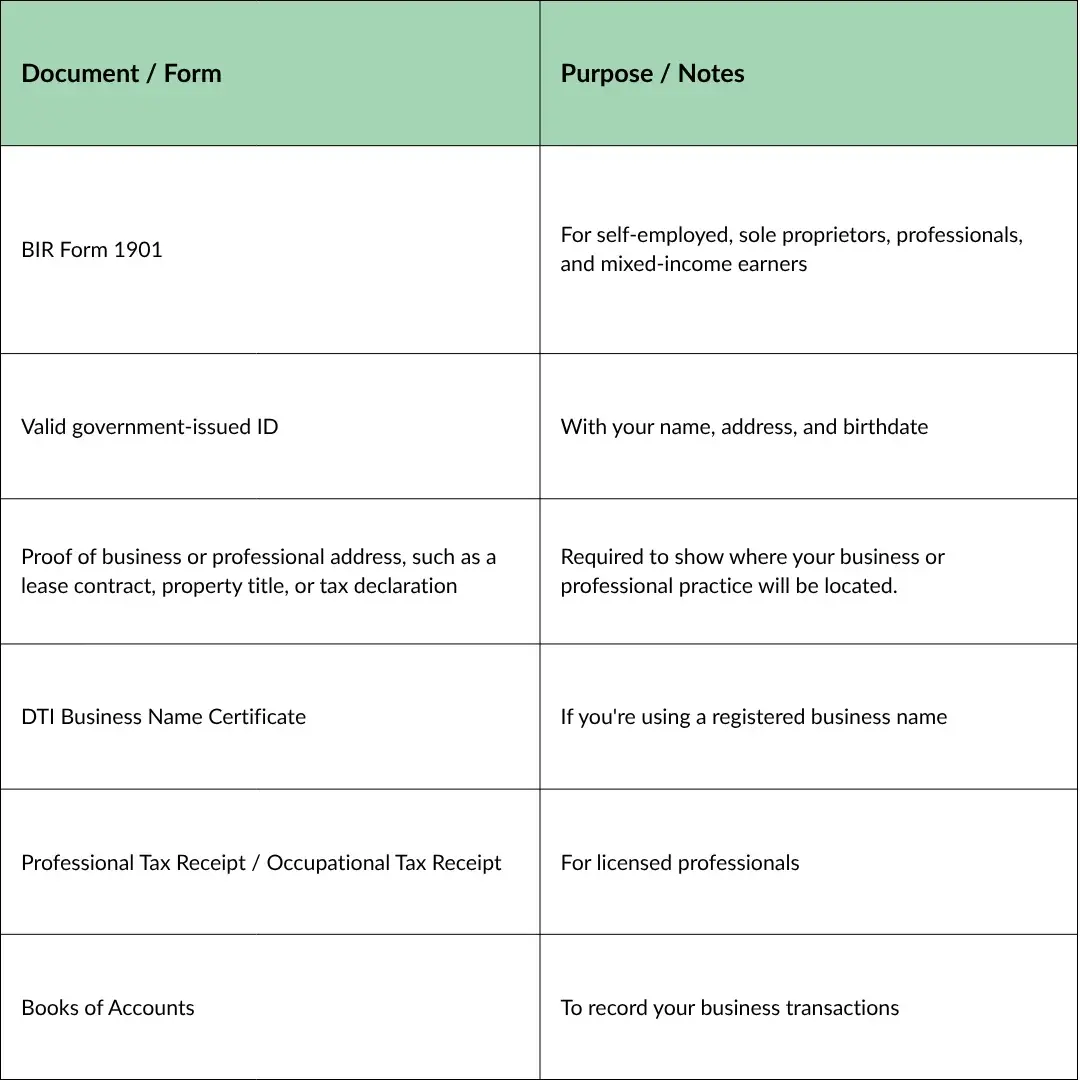
What You’ll Need: Documents & Forms - Table of BIR registration requirements for self-employed individuals in the Philippines, including BIR Form 1901, valid ID, proof of business address, DTI certificate, tax receipt, and books of accounts.
Step-by-Step: How to Register with BIR
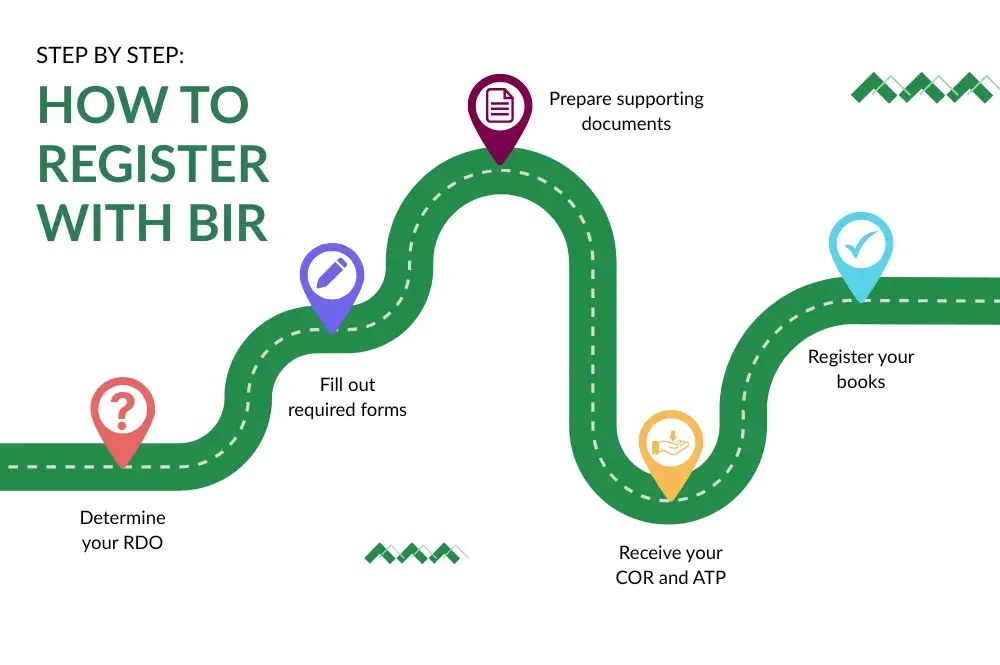
Step-by-Step: How to Register with BIR - Step-by-step BIR registration process for self-employed individuals in the Philippines, from determining the correct RDO and completing forms to receiving the COR and ATP and registering books of accounts.
Here’s a practical walkthrough of the process:
Determine your RDO
Go to the Revenue District Office that covers your business address or residence.Fill out required forms
Complete BIR Form 1901 (two copies), BIR Form 1906 (if printing receipts), and any other required forms.Prepare supporting documents
IDs, proof of address, permits, DTI registration, and books of accounts.Submit at the RDO
File everything at the New Business Registration counter.Receive your COR and ATP
Once your application is processed, you’ll receive your Certificate of Registration or BIR Form 2303. If you applied for an Authority to Print, you may proceed with printing your invoices through your chosen BIR-accredited printer.Register your books
Register your Books of Accounts through ORUS
What Happens If You Delay?
Delaying or skipping registration comes with risks:
Fines and penalties for late or non-registration
Inability to issue valid receipts/invoices, which can turn away clients
Barriers to growth—harder to get bank loans, government permits, or business partnerships
Risk of audit and legal enforcement by the BIR
Your registration deadline is whichever comes first: the date of your first sale transaction or 30 calendar days from the issuance of your Mayor’s Permit, Professional Tax Receipt, Occupational Tax Receipt, or DTI Certificate of Business Name Registration. If you make a sale before the 30-day period ends, you must already be registered by the date of that first sale.
For freelancers looking for a simple overview, Wise has a practical Philippines Freelance Tax Guide.
Tips to Make Registration Easier
Call your RDO in advance—requirements can vary slightly per office
Bring multiple copies of your documents to avoid delays
Ask if your RDO requires an orientation seminar (some do before issuing CORs)
Double-check that names and addresses are consistent across all documents
Use ORUS for online registration—the BIR’s Online Registration and Update System allows eligible self-employed individuals to submit their registration application and required documents online.
Always request an acknowledgment receipt to track your filing
Stay Compliant
Whether you’re a sari-sari store owner, an online seller, a licensed professional, or a freelancer, the BIR considers you self-employed. That means you must register, secure your Certificate of Registration, and start operating as a legitimate taxpayer.
Doing so not only keeps you compliant but also gives you credibility, helps you avoid fines, and opens doors to financial opportunities.
If you want a deeper dive into compliance after registration, check our guide on tax compliance for sole proprietors, freelancers, and professionals
Need help making sense of all this paperwork?
Need help making sense of all this paperwork? - Accountable PH consultation graphic offering help with BIR registration for self-employed individuals, freelancers, professionals, and business owners in the Philippines.
At Accountable PH, we simplify tax compliance for entrepreneurs, freelancers, and professionals. From registration to filing, we guide you every step of the way—so you can focus on growing your income without worrying about BIR deadlines.
Book a consultation today and take the stress out of tax compliance.
Tags:
BIR Registration, BIR Requirements, Business Registration, Freelancers, Philippine Tax, Self-Employed, Sole Proprietors, Tax Compliance
2024
2025
2026
August
July