tax
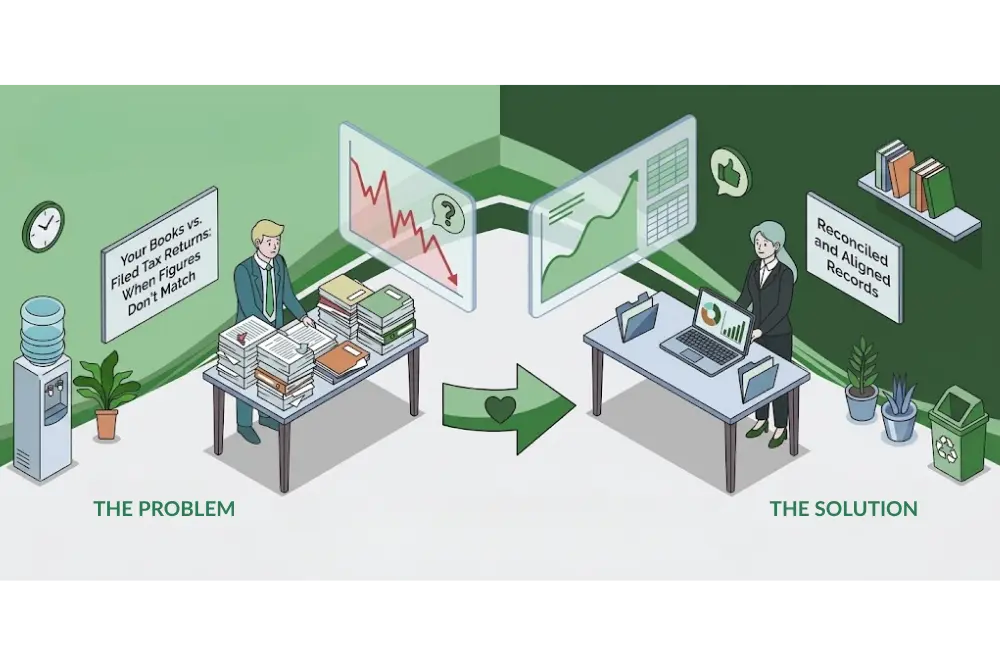
What Happens If Your Books Don’t Match Your Filed Tax Return?
Posted by Mariel Therese Deocampo
onAugust 03, 2026
What Happens If Your Books Don’t Match Your Filed Tax Return?
If your accounting records don’t match what you filed with the Bureau of Internal Revenue (BIR), it’s not just a minor discrepancy — it can lead to assessments, penalties, and possible audit exposure.
In the Philippines, businesses are required to maintain accurate books of accounts and ensure that these align with filed tax returns. When inconsistencies arise, it raises compliance concerns that the BIR may investigate.
If you’re unsure whether your records are aligned, it is best to have them reviewed early through professional bookkeeping services before issues escalate.
Why Books and Tax Returns Don’t Match
This situation is more common than many business owners expect.
Common causes include:
Missing or late-recorded transactions
Manual bookkeeping errors
Misclassification of income or expenses
Lack of regular reconciliation
Manual bookkeeping errors
Even small inconsistencies can build up over time and affect your tax filings.
What Happens If There Are Discrepancies?
1. Your Risk of a BIR Audit Increases
Discrepancies can trigger deeper review since the BIR compares:
Books of accounts
Financial statements
Tax returns
2. You May Be Assessed for Deficiency Taxes
If taxes are underreported, you may need to pay:
The unpaid amount
Plus penalties and interest
3. Penalties and Interest May Apply
These may include:
25% surcharge (for late or incorrect filing)
Up to 50% surcharge (for willful neglect or false returns)
12% annual interest on unpaid taxes
Compromise penalties depending on the case
These costs can quickly exceed the original tax due, which is why early correction is important.
How to Fix Mismatched Books and Tax Returns
1. Reconcile Your Records
Compare your books, financial statements, and tax filings to identify differences.
2. Identify the Cause
Look for missing entries, incorrect classifications, or timing differences.
3. Correct Records or File Amendments
Make the necessary adjustments and file amended returns if required.
4. Get Professional Help
If discrepancies involve multiple periods or complex records, it is advisable to work with a qualified accountant. Proper handling reduces the risk of further penalties and ensures compliance.
If you want clarity on your current records, having them reviewed by a professional can help you identify issues early and correct them properly.
How to Prevent This Moving Forward
Reconcile your records monthly
Keep your books updated consistently
Use reliable accounting systems
Maintain complete documentation
Consistent processes help ensure that your financial records and tax filings remain aligned.
When Should You Take Action Immediately?
You should act as soon as possible if:
Your books and tax returns do not match
You are unsure about past filings
You received a notice from the BIR
Your records have not been reviewed in months
At this stage, working with tax filing services in the Philippines can help you resolve issues before they escalate.
Need Help Fixing Your Books and Tax Filing?
If you suspect discrepancies in your records, addressing them early can help you avoid penalties and compliance issues.
A proper review can help you:
Identify inconsistencies
Correct errors accurately
Align your books with your tax filings
Stay compliant with BIR requirements
Book a consultation to have your records reviewed and ensure everything is aligned before it becomes a larger issue.
Frequently Asked Questions
Can I be penalized if my books don’t match my tax return?
Yes. If discrepancies result in underpayment or incorrect reporting, the BIR may impose surcharges, interest, and other penalties.
Will this automatically trigger an audit?
Not always, but inconsistencies can increase the likelihood of further review, especially if they are significant or recurring.
Can I still correct my tax return after filing?
Yes. Amended returns may be filed when errors are identified, subject to BIR rules.
How often should I reconcile my books and tax filings?
Monthly or quarterly reconciliation is recommended to detect and correct discrepancies early.
Tags:
Accounting, Bir, BIR Penalties, Bookkeeping, Books of Accounts, Tax, Tax Audit, Tax filing
2024
2025
2026
August
July